Every screen your students get
A student can go from "no idea" to a shortlist of careers, the exact path into each one, and the university programs that lead there, side by side with the marks, courses and costs. Every picture below is the real site, taken from career.help today. Tap any of them to open that screen.
Step 1
Find a career
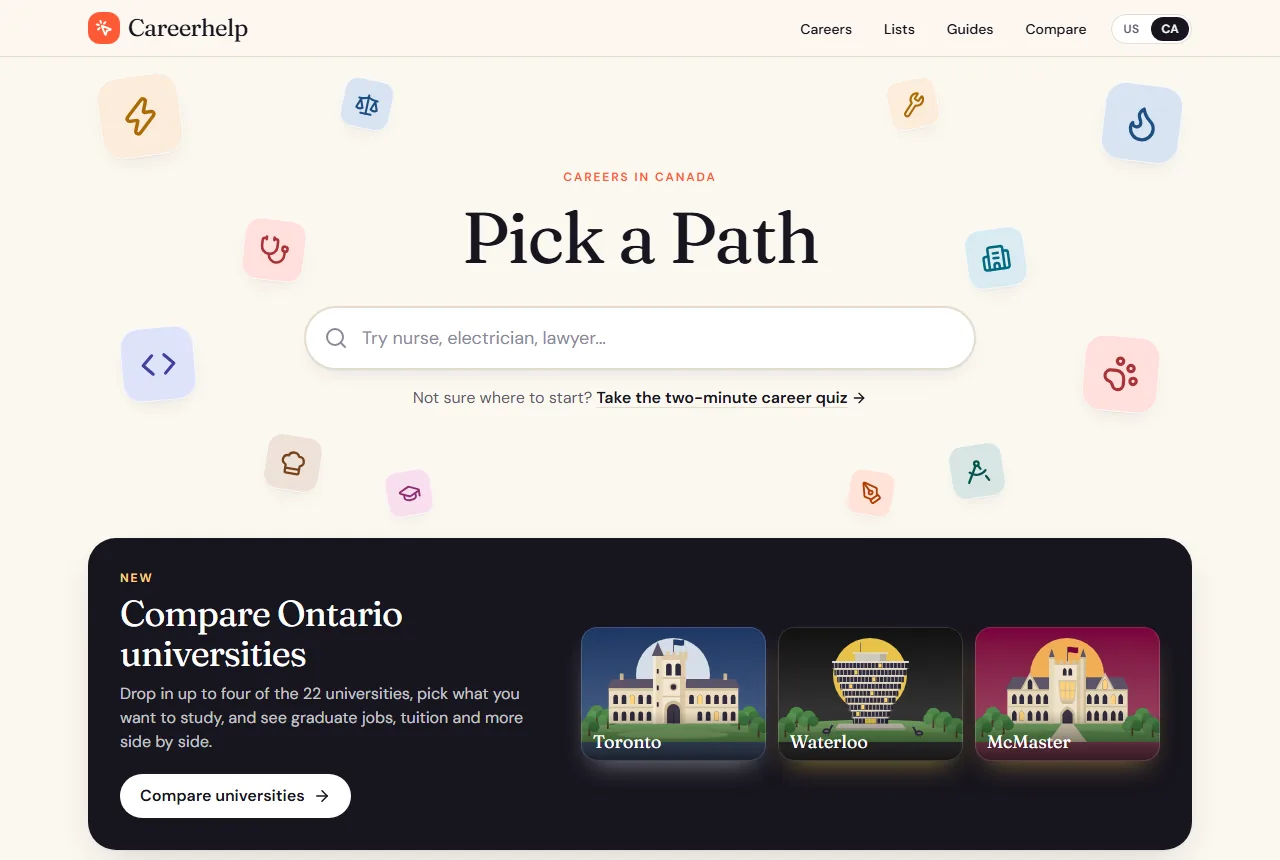
Students start by typing a job they have heard of, such as nurse, electrician or lawyer, or by browsing all 447 careers by field. The home page also opens straight into the lists and the university comparer, so a student who arrives with a question rather than a job title still has somewhere to go.
Step 2
See the whole career at a glance
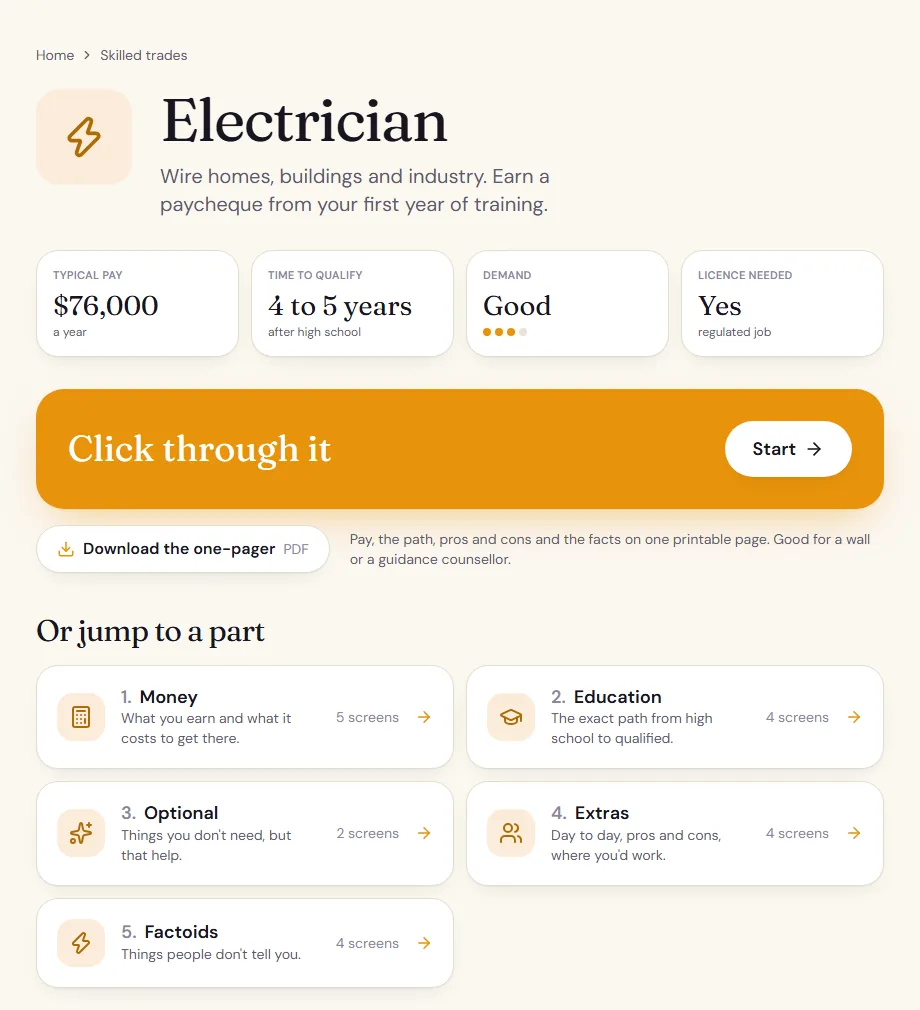
Every career opens on the four facts students ask first: typical pay, how many years it takes after high school, how much demand there is, and whether you need a licence. Under that are plain answers to the questions people actually search, the five parts to click through, and a one-page summary to download and print.
Step 3
Click through it, one screen at a time
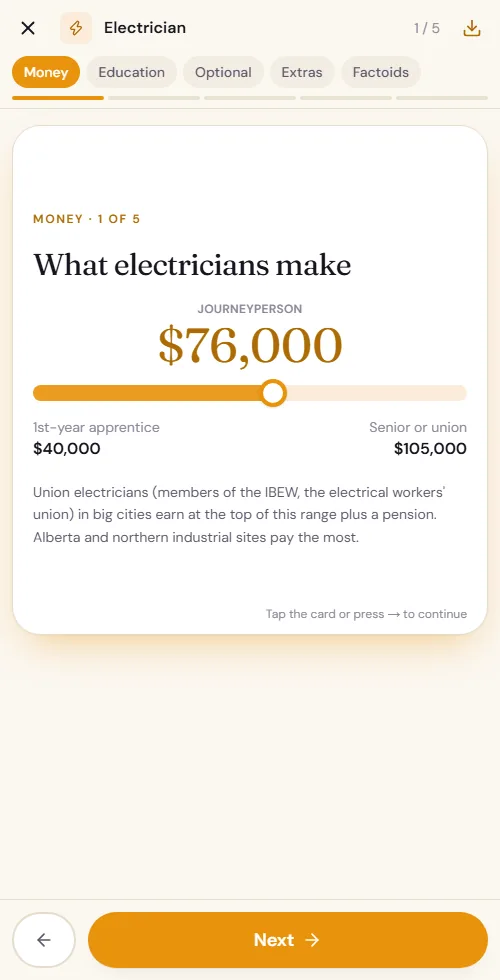
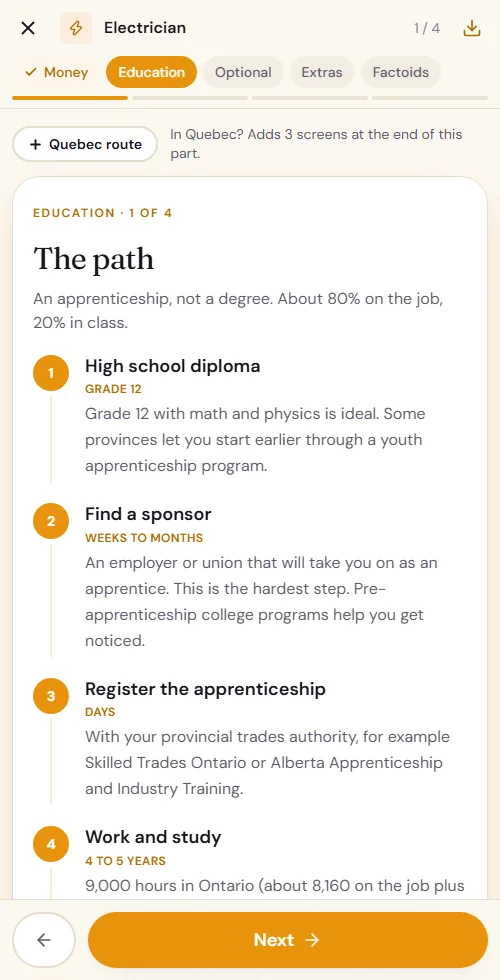
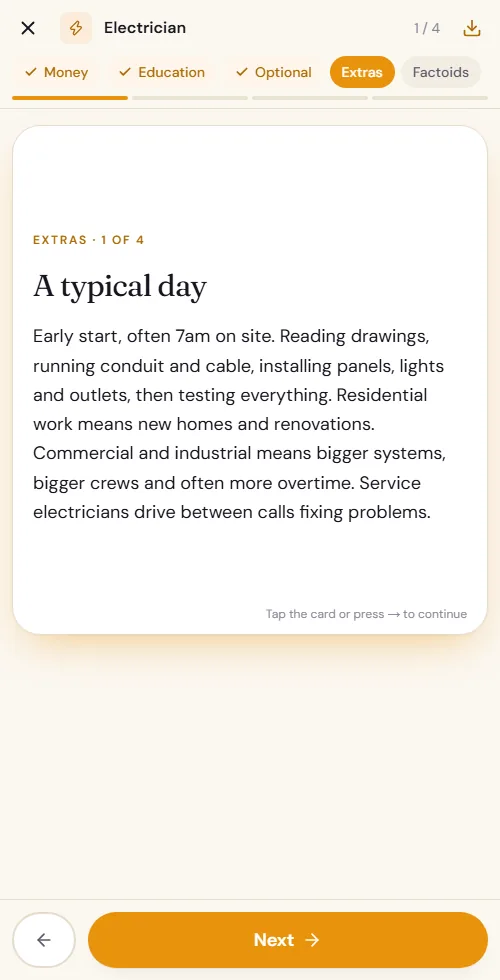
This is the heart of Careerhelp. Each career is split into five parts, Money, Education, Optional, Extras and Factoids, and each part is a few short screens. A student taps the card or swipes to move on, so it reads like a story on a phone rather than a wall of text.
Money shows the pay range from the first year to the top, with the reason for the spread. Education is the exact path, step by step, with how long each step takes and the province's own route where it differs. Extras is a typical day, the pros and cons, and where people in the job actually work. Factoids are the things nobody mentions until you are in it.
Step 4
Not sure where to start? Take the quiz
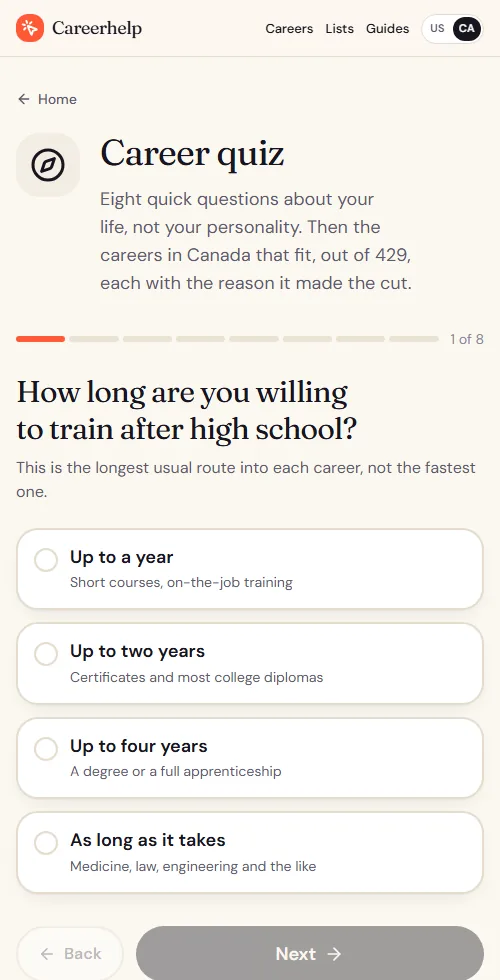
The career quiz asks eight questions about a student's life, not their personality: how long they are willing to train, what they want to earn, whether they mind a licence exam, where they want to work. Then it gives a shortlist from all 447 careers, each with the reason it made the cut.
The answers are saved in the link, so a student can bookmark the result, come back to it, or bring it to a guidance appointment.
Step 5
Compare programs at every Ontario university
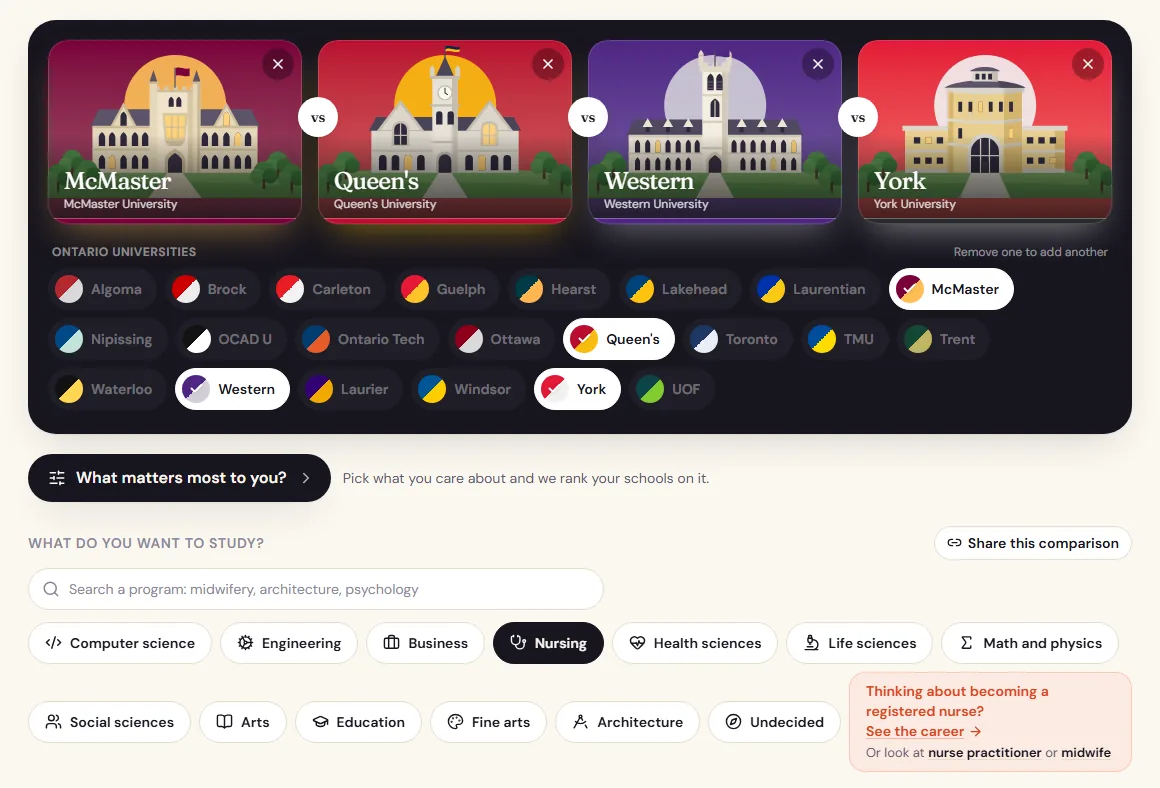
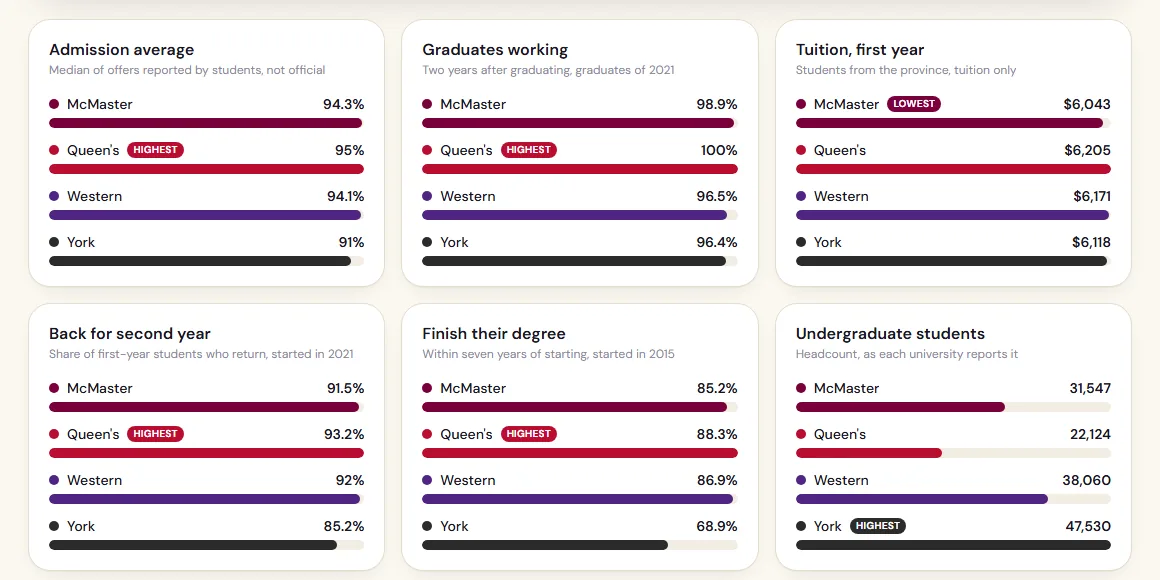
The university comparer covers 1,312 first-year programs at all 22 Ontario universities. A student drops in up to four schools, picks a field or searches a program, and sees them side by side. The example below is nursing at McMaster, Queen's, Western and York.
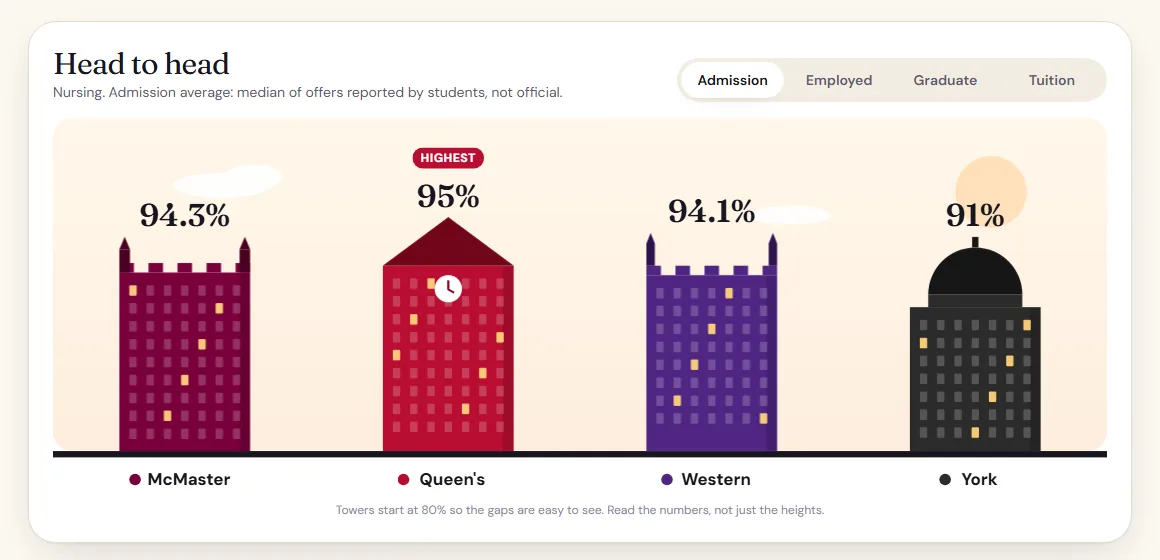
Then the factors that decide where to apply, school against school: the admission average students reported with their offers, how many graduates are working two years later, first-year tuition, how many students come back for second year, how many finish the degree, and how big the school is. The highest and lowest are marked so the differences jump out.
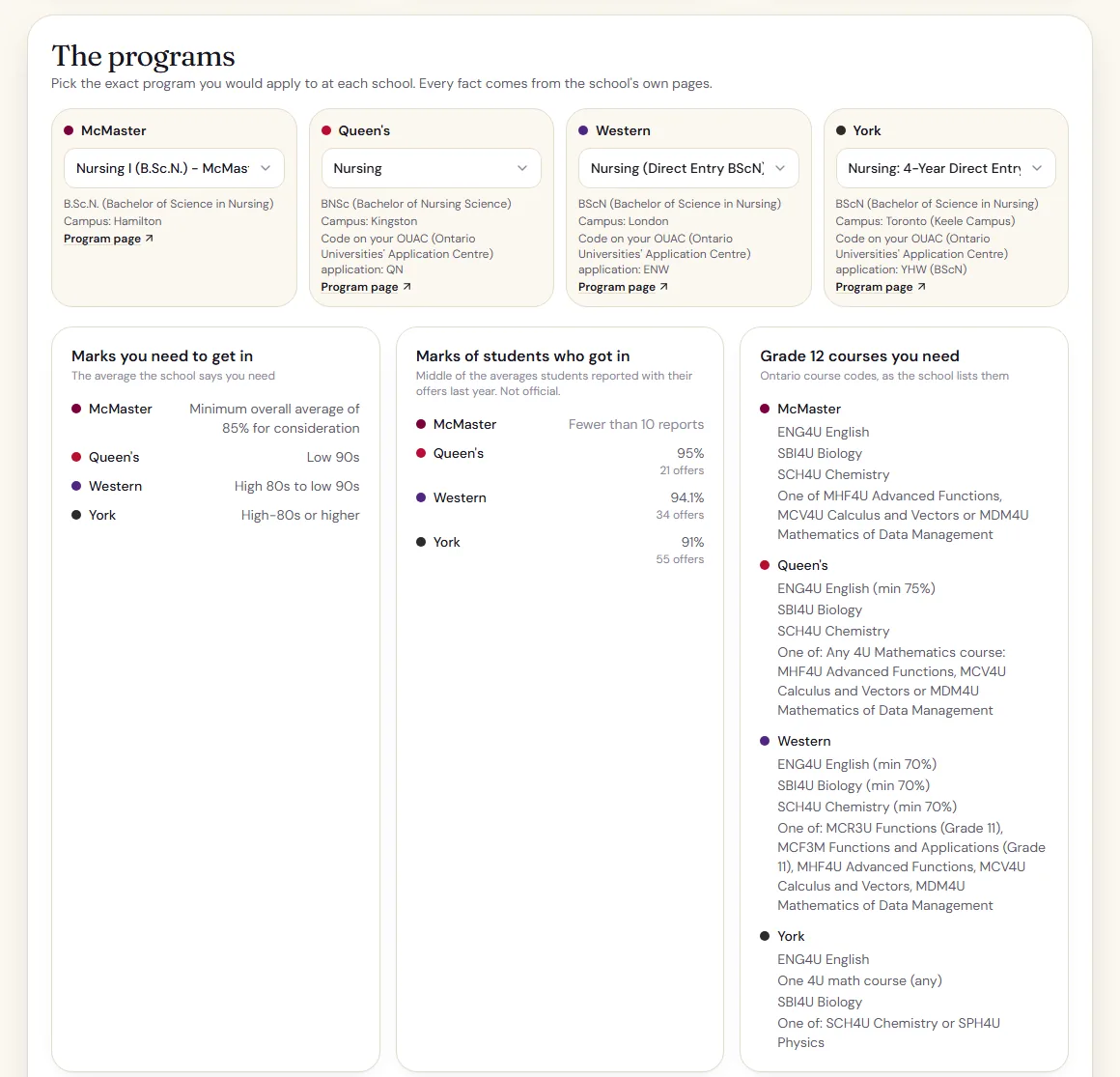
Below that is the exact program at each school, from the school's own pages: the marks it says you need, the marks of students who actually got in, the Grade 12 courses it asks for with their course codes, extra steps such as Casper or a supplementary application with their deadlines, co-op, how long it takes, and what you can major in later. This is the part students usually piece together from a dozen tabs.
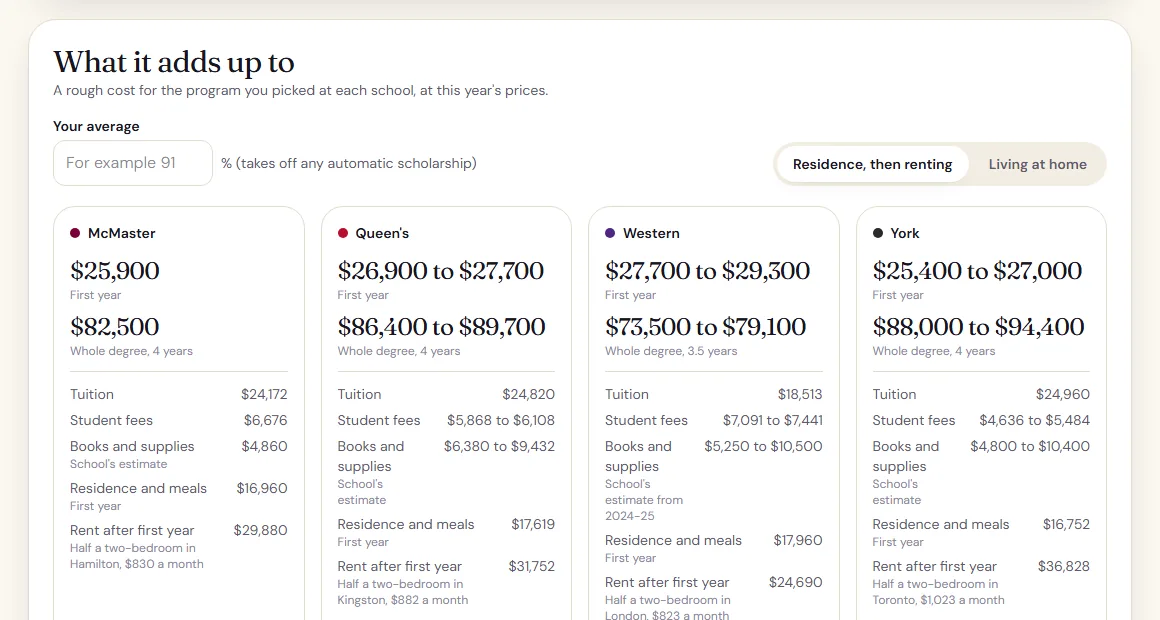
Finally, what it adds up to: the first year and the whole degree at each school, with tuition, fees, books, residence and rent after first year. A student types in their average to take off the scholarships every student with that average gets automatically, or switches to living at home.
Step 6
Browse the lists
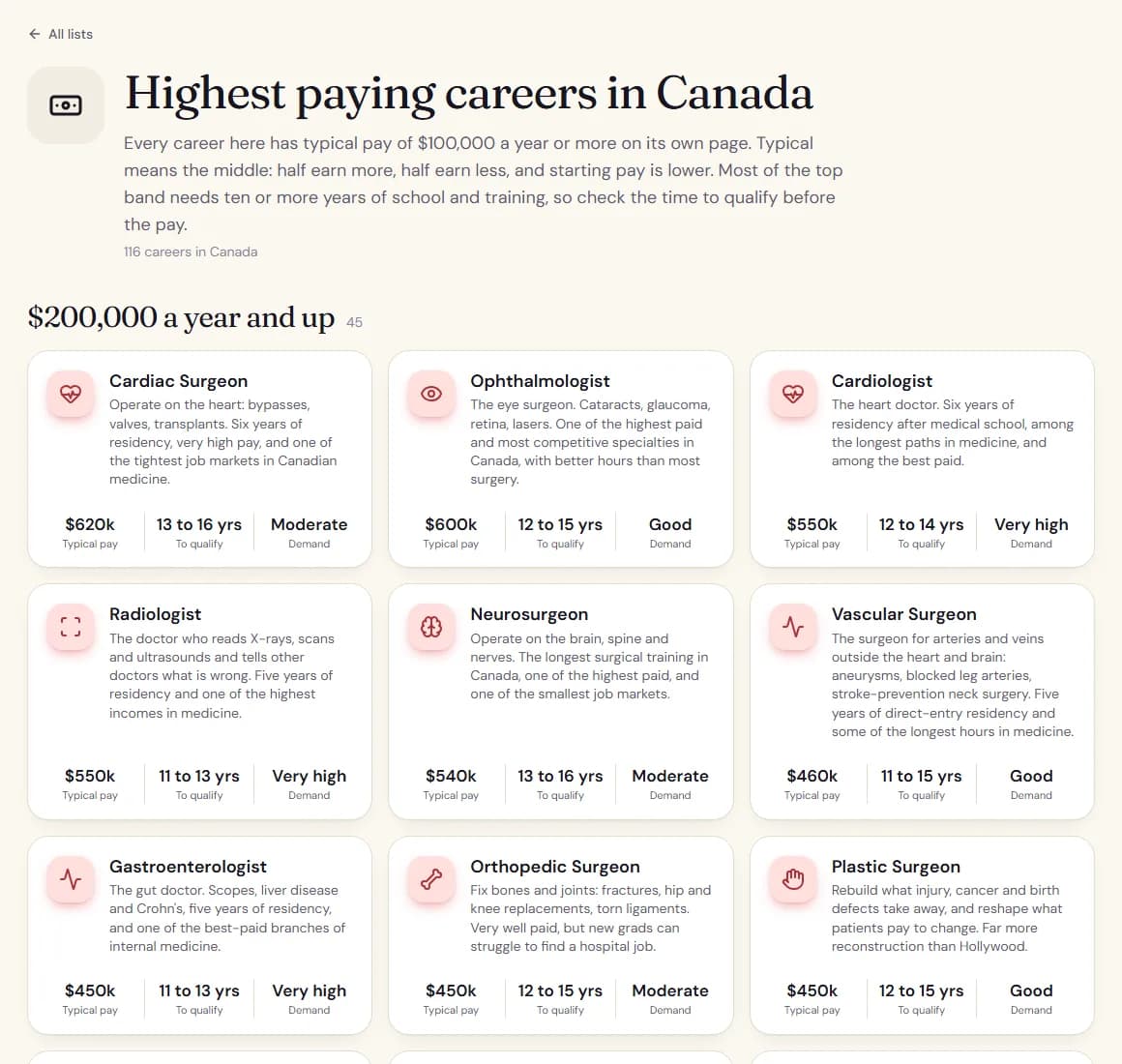
18 lists answer the questions students ask most: the highest paying careers, careers in demand, careers you can qualify for in two years or less, careers you can do from home, careers that cost under $5,000 to train for, and one for every field. Each card shows pay, years to qualify and demand, so a student can scan a whole field in a minute. A new career lands in every list it qualifies for automatically.
Step 7
Read the guides
The 12 guides take on what students see on TikTok and YouTube: whether day trading is a real career, how much YouTubers make, whether dropshipping still works, how to spot a make-money-online scam. Each one uses the research and the same sourced figures as the rest of the site, and links straight to the careers it talks about.
New every month, at 95 cents a student a year
Everything above is what a licence includes today, and it keeps growing. New features ship every month, all year: new careers, new programs, new comparisons and new tools. Each one goes live for every licensed school the day it ships, at no extra cost.
That is why orders are open now at 95 cents a student a year. A school that orders now has that price for the whole year, with every monthly update and every new feature included.
Careerhelp was founded in Ontario, so Ontario schools come first. They get the first orders, the lowest price, and every new feature before any other province or any US state. For Ontario schools the price will not go past 95 cents a student a year for two years. That includes every feature update; there is no extra cost for a single thing. A school can lock in both years on the order form.
Order for your school
The first 500 schools to order are guaranteed a licence for this school year, set up before university applications open in January. Orders are invoiced on 20 November 2026 with 30 days to pay, so nothing is due now.
Careerhelp is open to everyone until Friday 20 November 2026, so you can try every screen on this page with your students before then. The full terms are on the Careerhelp for schools page.
Questions: hello@career.help